
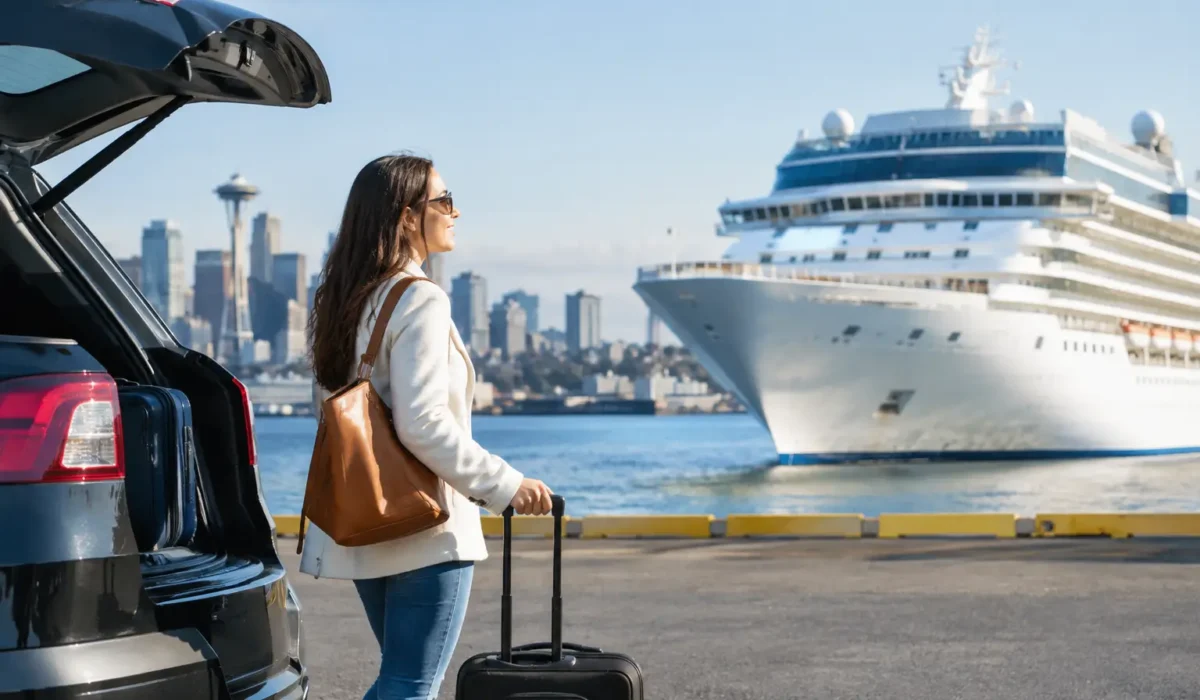
A cruise vacation should begin when you leave home, not after you have dealt with airport bags, traffic, and an uncertain ride to the terminal. This cruise embarkation transfer guide helps you plan the ground transportation details that protect your boarding schedule and let you arrive at the port relaxed, organized, and ready to travel.
For Seattle cruise guests, the right plan depends on where you are starting, which terminal your ship uses, how much luggage you have, and whether your group is arriving together. A private, pre-arranged transfer removes several variables at once: your vehicle is reserved, your pickup plan is clear, and there is room for the people and bags traveling with you.
Start With Your Ship, Terminal, and Boarding Window
Before booking transportation, confirm the ship name, sailing date, terminal address, and the arrival window listed in your cruise documents. Seattle sailings commonly use Pier 66 or Pier 91, but terminal assignments can change. Do not rely on a past itinerary, a hotel concierge recommendation, or an assumption based on cruise line alone. Your final cruise documents are the source to follow.
Most cruise lines assign an arrival window rather than asking every guest to reach the port at the same time. That window helps manage security, luggage drop-off, and check-in flow. Plan to arrive within it unless your cruise line gives you different instructions. Reaching the terminal far too early may mean waiting outside or in a crowded holding area, while arriving late can turn ordinary traffic into a serious problem.
For travelers leaving from Seattle-Tacoma International Airport, the transfer time to the cruise terminals is not fixed. Time of day, freeway conditions, construction, sporting events, and summer visitor traffic all matter. A weekday morning can look very different from a Saturday afternoon. A dependable transfer plan builds in reasonable time for these variables without sending you to the port unnecessarily early.
Choose the Right Pickup Time, Not Just the Shortest Route
The best pickup time is calculated backward from your requested terminal arrival time. Start there, then allow time for the drive, loading luggage, possible traffic delays, and any stops your party genuinely needs.
If you are flying in on embarkation day, leave more margin than you think you need. A flight that lands on schedule still requires time to taxi, deplane, collect checked luggage, and meet your chauffeur at the agreed pickup location. Travelers arriving from another time zone may also appreciate avoiding the pressure of figuring out airport pickup while tired and managing multiple bags.
For this reason, arriving in Seattle the day before departure is often the lower-stress choice, especially for long-haul flights, families with young children, and guests sailing on an itinerary they cannot afford to miss. It adds a hotel night, but it removes the risk that a flight disruption will place your entire vacation in question. When same-day arrival is unavoidable, book a transfer with a clearly confirmed pickup process and share your flight details in advance.
Hotel guests have a simpler starting point, but should still avoid guessing. Confirm the hotel entrance where the vehicle can safely meet you, have bags ready before the scheduled pickup, and allow a few minutes to gather everyone in your party. A prompt departure is easier when the group knows that the stated pickup time is the time the vehicle needs to be moving.
Match the Vehicle to Your People and Luggage
Cruise luggage is different from a standard airport trip. Many guests travel with large checked suitcases, carry-ons, garment bags, backpacks, mobility items, and sometimes a cooler or travel crib. A vehicle that seems adequate based on passenger count may not be adequate once every bag is at the curb.
When reserving transportation, provide an honest passenger and luggage count. Include oversized items and mention if anyone needs extra assistance entering or exiting the vehicle. This allows the transportation provider to assign the appropriate option rather than making last-minute adjustments at pickup.
A luxury black SUV, such as a GMC Yukon XL, is a comfortable choice for couples, families, and smaller groups that want generous luggage capacity and private space. For larger families, wedding groups, or several cabins traveling together, a Mercedes Sprinter can provide a more practical arrangement. The point is not simply choosing the largest vehicle available. It is choosing one that gives your party room to ride comfortably while keeping bags secure and accessible.
There is a trade-off worth considering. Splitting into multiple rides may appear convenient, but it creates separate arrival times, separate luggage plans, and more coordination at the terminal. One properly sized vehicle often keeps the group calmer and makes it easier to start the check-in process together.
Confirm the Details That Matter on Embarkation Day
A reservation is only useful if the important details are correct. Review your confirmation a few days before sailing and make sure the pickup date, time, address, terminal, passenger count, and phone number are accurate. If your hotel changes, your flight is delayed, or an additional family member joins the ride, communicate that change as soon as possible.
For airport pickups, clarify exactly where you will meet your chauffeur. Airports have designated commercial pickup procedures, and the correct meeting point may differ by arrival area or operating conditions. A good plan gives you a specific instruction instead of asking you to search through airport traffic with luggage in hand.
Keep your phone charged and turn off settings that silence calls from unknown numbers during the pickup period. Save the transportation provider’s contact information before travel day. These small steps are especially useful when a flight lands early, bags arrive at a different carousel than expected, or airport operations change the pickup flow.
Bring your cruise documents, passports or required identification, medications, and valuables with you in a carry-on bag. Do not place essential documents in luggage that will be handed to port staff. Once bags are tagged and loaded for the ship, you may not see them again until later in the day.
What to Expect at the Cruise Terminal
Your chauffeur can deliver you and your luggage to the designated passenger drop-off area, but the cruise terminal process begins from there. Port staff typically direct guests toward baggage drop, security, and check-in. Follow their instructions, even if the line arrangement looks different from what you expected.
Have luggage tags attached before reaching the terminal whenever possible. Keep each traveler’s boarding documents accessible, and make sure the person carrying passports knows where they are. If your group has different cabin reservations, discuss who is responsible for documents and bags before getting out of the vehicle.
Embarkation can involve short waits, security screening, and a fair amount of walking. Wear comfortable shoes and keep rain protection handy during the Pacific Northwest cruise season. Seattle weather can shift quickly, and a compact umbrella or weather-appropriate layer is more useful at the curb than it is buried in a suitcase.
Why Private Cruise Transfers Reduce Travel-Day Stress
Rideshare apps and taxis can work in some situations, particularly for a single traveler with light luggage and a flexible schedule. But cruise embarkation is a timed event. It is not the day to discover that a vehicle is too small, a driver has canceled, or pickup access is unclear.
A reserved private car service offers a defined vehicle, a professional chauffeur, and a confirmed plan for your party. The value is not only the ride itself. It is the confidence that your pickup has been arranged around your schedule, luggage needs, and destination.
Lal Limo Service provides private cruise port transportation for guests who want a clean, spacious vehicle and a punctual, professional experience. With transparent planning and the right vehicle for the group, passengers can focus on the trip ahead instead of the logistics at the curb.
Before you close your suitcase, take one final look at your transportation confirmation and cruise documents. A well-planned transfer turns embarkation day into the calm first chapter of your vacation, exactly as it should be.




What Affects Chauffeur Trip Cost? Key Factors
What affects chauffeur trip cost? Learn how distance, vehicle choice, timing, stops, and service needs…

Transparent Limo Pricing Explained Clearly
Transparent limo pricing explained for airport, cruise, business, and event rides, so you can compare…

A Practical Guide to Private Intercity Travel
This guide to private intercity travel covers planning dependable, comfortable long-distance rides, from vehicle choice…

Best Private Transportation for Families in Seattle
Find the best private transportation for families with room for luggage, child seats, reliable pickup…

Cruise Embarkation Transfer Guide for Seattle
Use this cruise embarkation transfer guide to plan port timing, luggage, pickup details, and a…

Cruise Transport Comparison for Port Day
Use this cruise transport comparison to choose between private SUVs, rideshares, shuttles, taxis, and parking…

How to Book Cruise Transfers Without Port-Day Stress
Book cruise transfers with the right pickup time, vehicle, and luggage plan for a dependable,…

When Should Cruise Pickup Arrive at the Port?
When should cruise pickup arrive? Plan the right arrival time for Seattle cruise terminals, avoid…

How to Book Airport Chauffeur Service With Confidence
Learn how to book airport chauffeur service with clear pricing, the right vehicle, flight tracking,…

Airport Ride for Early Flights That Shows Up
Book an airport ride for early flights with a professional chauffeur, a spacious vehicle, clear…

